Originally
published in Scratch magazine, February 2006 - See more at:
http://www.nodfactor.com/2010/02/07/still-lives-through-j-dillas-last-interview/#sthash.ULJKY2dd.dpuf
Publicada oficialmente en la revista Scratch en Febrero del 2006
Como la vida de Dilla, esta entrevista termina demasiado pronto. Tres años después leo esto y pienso “maldita sea, el realmente estaba diciendo mierda real.” Podes escuchar un poquito de la frustracion que J-Dilla sentia como productor a pesar de los elogios que llueven despues de su muerte. El leia todas las reseñas de su trabajo, y aunque algunos no quieran aceptarlo ahora, no siempre fueron positivas. Aunque habia acumulado una impresionante discografia, igualmente tuvo que abastecer a los artistas a los que les hizo beats. Y mientras Momma Yancey es claramente su mas grande seguidor, ella tambien tuvo algunos recelos sobre las decisiones de su carrera al principio.
Asi que cuando leas esto no pienses nada mas en J-Dilla el musico talentoso, recorda a el hombre James Dewitt Yancey.
Entrevista por Alvin “Aqua Boogie” Blanco
Que te hizo elegir L.A. por ensima de Miami o NYC?
Pense en New York pero en New York el estudio se llenaria de gente. En LA, miras afuera y es como palmeras, amanecer y conoces una sabes una sensación totalmente diferente de trabajo.
Mencionaste no tener un monton de gente en el estudio, te gusta mantenerte solo vos y el artista en el estudio?
Yeah, me gusta mantenerlo minimo.
Que parte de L.A. es?
West Hollywood.
Seguis teniendo una casa en Detroit?
Yeah, sigo teniendo mi casa y en realidad todo mi equipamento esta alla. Estoy buscando un lugar ahora para poder mandar todo para aca.
Asumo que tenes algunos equipos en L.A. no?
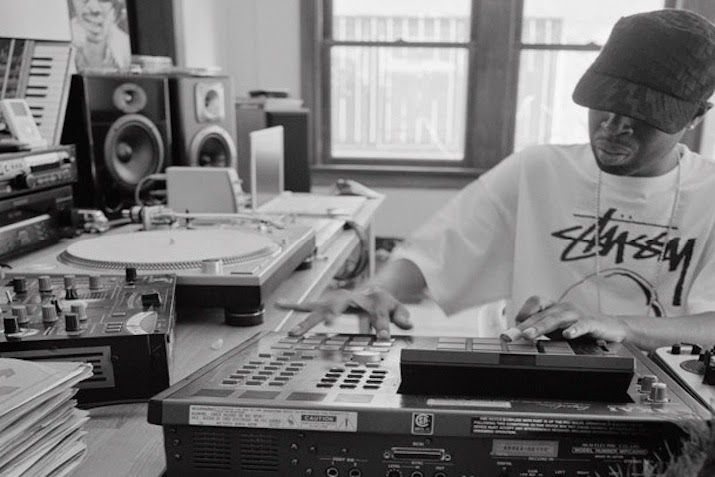
Solo tengo lo basico. Un MPC, un par de bandejas y eso es todo realmente.
Con que equipamento empezaste?
Empece con el SP-12 (E-mu Systems) despues me pase al SP-1200 (E-mu Systems) y un tiempito despues de ese al MPC-60 (Akai), despues el MPC-62, despues el MPC3000 y estuve usando el MPC 3000 desde ese entonces. Probe otros otros samplers pero el 3000 es mejor para mi por lo que a mi me gusta hacer.
Que hay de ese especificamente?
Es solo mas facil para programar y me gustan los node offs y mono pads. Puedo hacer mas con ese. Supongo que porque lo conosco mejor.
Segun tus grabaciones sos un big digger (gran escavador)?
Yeah man. Soy un fanatico de las disquerias. Ya tengo una buena cantidad aca y tengo un deposito lleno de discos en Detroit, es ridiculo. Perdi un monton de discos tambien. Teniendolos ahi, muchos se humedecieron y volver a checkearlos periodicamente es bastante dificil.
Cuantos crees que tenes?
Tengo que preguntarle a alguien, ni siquiero lo se.
Cuantos años tenias cuando empezaste a hacer beats?
Empece a hacer beats cuando aparecio “Big Mouth”, sea el año que sea.
El tema de Whodini?
Whodini - Big Mouth (1984)
Yeah, porque yo ya estaba DJ’ing antes de eso pero umm, esa cancion me hizo querer meterme en el lado de la produccion y empezar a joder con eso. Entonces la gente iba a los estudios, Metroplex Studios, ese estaba en Detroit. Nosotros fuimos los primeros hip-hop cats (cat: un buena onda, tambien musicos generalmente de jazz que la rompan) en ir ahi. Fue algo distinto para ellos.
Cuando decis nosotros te referis a Slum Village?
Nah, esto fue con un compañero mio con quien iba a la escuela llamado Chuck. De hecho el era el MC y yo ponia los beats.
Que tan metido estabas en DJing, estabamos en tu casa o rockeando fiestas?
Hacia fiestas y lo tipico, de hacer beats en las pausas y grabar cosas como hacian muchos cats.
Ademas del DJing, sabias que equipos necesitabas para empezar a producir?
Nah, no sabia nada man. Afortunadamente me cruze con este cat caminando por la calle, literalmente. Este tipo llamado Amp Fiddler. Aparecio caminando por la calle y me vio, veniamos caminando con un par de amigos. El nos llamo y desde el primer dia el nos mostro todo sobre como funciona un estudio y cosas como esa. Tenia un pequeño estudio de pre-produccion en su casa. Nos dijo cualquier cosa que quieran vengan a mi casa. Tenia cassettes asi que podiamos hacerle escuchar algunas cosas-el estaba como "Cualquier cosas que quieras veni y yo estoy con vos, si queres grabar algo o trabajar en la drum machine.” Yo empece a ir a joder con los beats.
El vivia en tu barrio?
Yeah, a un par de cuadras.
Yo lo conoci como un R&B dude. Estaba metido con el hip-hop en ese momento?
Claro, Claro. Nah, de hecho sonaba como Domino, te acordas de ese cat Domino que cantaba y rapeaba un poco? El estaba haciendo eso antes de que yo escuche a Domino. Antes que una banda de cats. Estaba contratado por Elektra Records y el me mostro los temas que nunca salieron. El nos estaba enseñando un poco como es la industria. Tenes que mirar lo que haces y mirar bien los papeles cuando estas firmando. De hecho nos enganchamos en muchos tratos bien locos.
Tuviste a alguien dandote la mana como, “Asi es como la rompes con el sampler”?
De hecho, lo que Amp hizo fue, mostrame como usaba el MP pero me decia como, "No voy a mostrarte como funciona. Tenes que aprenderlo vos mismo.” Era como "no uses un libro.” Hasta el dia de hoy nunca lei un libro los manuales de los samplers y todo eso, yo solo trate de aprenderlo. Sacando esta ultima drum machine, esta Korg que me compre. Es como muy complicada. Tuve que leer esa mierda. Mucha gente dice Oh, Amp te enseño como usar el MP, realmente no.
Siempre fuiste una bestia con los samples, es por el equipo que usas?
Sabes que? Tiene mucho que ver con el tiempo que paso con el sampler. Podes solo samplear mucho y asi es como empieza. Yo suelo escuchar records y, no quiero decir buscar errores pero cuando los escucho es exitante para mi. Como, “Damn, el baterista le erro al beat en esa shit. El guitarrista le erro a la nota por un segundo.” Trato de hacer eso en mi musica un poco, trato de conseguir esa sensacion del vivo un poquito.
Oh, te referis cuando escuchas a…
Un tema viejo como de Jack McDuff.
Algo tocado en vivo?
Mmm hmm.
Como se arma un track de Jay Dee?
Ultimamente puedo decir, no digo esto usualmente, pero ultimamente empieza con samples porque me estoy metiendo mucho en los discos. Estuve comprando muchos 45s. Trato de conseguir un groove de los 45’s porque es como que solo publicaron singles. Lo que yo hago es buscar un groove o algo para empezar y despues construyo alrededor de eso. Trato de hacer algo de eso.
Estoy en desventaja porque todavia no escuche Donuts pero cuanto tiempo tardaste en hacerlo?
En realidad, diria desde ultimo año a los ultimos meses. Es solo una compilacion de las cosas que pense que eran un poco demaciado para los MCs. Eso es basicamente lo que es, ya sabes yo usando grabaciones que la gente realmente no sabe como rapear ensima pero que lo quieren hacer. Hay mucho de eso.
Ya que mencionas eso, Digamos que en Like Water for Chocolate, tu estampa estaba en todos lados y fue muy bien recibido. Despues tenes Electric Circus, los beats fueron diferentes pero los medios, y el mismo Common, dijeron que era demasiado diferente. Eso alguna vez te molesto?
Sabes no me molesta porque lo que la gente no entiende es como cuando yo...yo mismo, cuando voy al estudio, solo trato de darle al artista lo que el quiere. Como Water for Chocolate, los dos estabamos mirando en la direccion en la que el empezo o lo que era el hip-hop aspero en ese momento. En Electric Circus, el queria hacer algo totalmente distinto. Le di un monton de beats, y el simplemente se sento ahi, despues en cuanto yo hacia algo zarpadamente loco, fast uptempo, el estaba como, ‘Yeah, vamos a usar eso.’ No quiero que la gente piense que eso es todo lo que yo le di, yo tengo que darle lo que el me pida. Es como dificil leer esas reseñas sabiendo eso, “Damn, ellos no entienden esa shit.”
Eso fue con Common, usaste el mismo acercamiento con Badu o D’Angelo?
Trate de darles…es un poco distinto en ese caso. Como Badu, ella es muy como demandante vos sabes R&B diva shit. Ella de hecho quizo acercarse, ayudarme a elegir el sample. “Quizas deberias freak eso, o freak eso.” Es un poco diferente con ella que con D’Angelo o Busta Rhymes quienes lo toman como es. Ellos solo trabajan encima del beat tape. Es una gran diferencia.
Es mas duro en el caso de Badu?
Yeah, es como que te pone en un lugar como, “Damn, realmente estoy trabajando ahora.” No deberia ser asi de dificil. Nos sentamos en el estudio un dia y medio y no pudimos hacer ni un tema solido. Cuando con Busta o D’Angelo ellos ya tenian el tema elegido.
Que piensan tus parientes de tu musica?
Al principio era musica del diablo directamente (risas). Mi viejo queria tirarme los equipos a la calle. Pase por eso que muchos cats vivieron. Con el tiempo empezar a aflojar pero una vez que empece a cobrar, no solo financieramente sino tambien como yo me sentia como lo que hacia realmente aflojaron. Hay puteadas y cosas como esas que no quieren escuchar de mi pero aprecian lo que hago.
“
I went through that whole thing a lot cats either go through or went to,” J-Dilla, November 2005
Much like Dilla’s life, this interview was ended way too soon. Three
years later I read this and think “damn, he really was saying some real
spit.” You can hear just a little bit of the frustration that
J-Dilla
felt as a producer despite the accolades he’s been showered with since
his death. He read the reviews of his work just like you all do, and
while some might not want to admit it now, those reviews weren’t always
positive. Even though he’d racked up an impressive discography, he
still had to cater to the artists he made beats for. And while Momma
Yancey is clearly his biggest supporter, even she had some misgivings
about his career choice in the beginning.
So when you read this don’t just think of J-Dilla the gifted musician, remember James Dewitt Yancey the man.
Interview by Alvin “Aqua Boogie” Blanco
Aqua: What made you choose L.A. over Miami or NYC?
J-Dilla: I thought about New York but in New York the
studio would get crowded with a lot of people. In LA, you look outside
it’s like palm trees, sunshine and you know a totally different feel
working.
You mentioned not having a bunch of people in the studio, do you like to keep it just you and the artist in the studio?
Yeah, I like to keep it to a minimum.
What part of L.A. is it?
West Hollywood.
Do you still keep a crib in Detroit?
Yeah, I still got the crib and then actually all my equipment is out
there. I’m looking for a crib now so I can ship my equipment out here.
I’m assuming you got some equipment out in L.A. right?
I got just the basics. AN MPC a couple of turntables and that’s really it.
What equipment did you start with?
I started with the SP-12 then moved to the SP-1200 and then shortly
after that the MPC-60, then the MPC-62, then the MPC3000 and I’ve been
on the MPC 3000 ever since then. I’ve tried other samplers but the 3000
is best for me for what I like to do.
What about it specifically?
It’s just easier for me to program and I like the node offs and mono
pads. I can just do more with it. I guess cause I know it better.
As far as your records are you a big digger?
Yeah man. I’m a record shopping fanatic. I already got a nice stash here
and I got a warehouse full of records in Detroit, it’s ridiculous. I
lost a lot of records too. Having them in that storage paper, records
was getting damp and to go back periodically and check on them is kind
of hard.
What would you estimate as far as how many you have?
I’d have to ask somebody, I don’t even know.
How old were you when you started making beats?
I started making beats when “Big Mouth” came out, whatever year that was.
The Whodini joint?
Yeah, cause I was DJ’ing before that but umm, that song actually made me
want to get into production side and started messing around. Then
people would go to studios, Metroplex Studios, that was in Detroit. We
were like the first hip-hop cats to come in there. It was a little
different for them.
When you say we do you mean Slum Village?
Nah, this was actually me and a partner of mine that went to school with
me named Chuck. He was actually the MC and I provided the beats.
How far were you into the DJing, were you in the crib or rocking parties?
I was doing parties and the typical, making beats on the pause and record thing like a lot of cats were doing.
Besides the DJing, did you know what kind of equipment you had to get to start producing?
Nah, I ain’t know nothing man. Fortunately I ran into this cat just walking in the street, literally. This guy named
Amp Fiddler.
He actually came out in the street and seen me, YG and couple of other
cats, we were just walking. Yeah, this guy name Larry and a couple of
other cats that just went to high school with us. He just called us out
and from that first day he actually showed all of us how a studio works
and things like that. He had a little pre-production studio in his crib.
He was like whenever you want to, come by the crib. We had cassettes so
we could play him some stuff-he was just like “Whenever you want to
come by and I got you, if you want to record something or work on the
drum machine.” I started going over there messing with beats.
He lived in your neighborhood?
Yeah, a few blocks away from me literally.
I know him as an R&B dude. Was he into hip-hop back then?
Right, right. Nah, he actually sounded like Domino, remember that cat
Domino that was singing and rapping a little bit? He was doing that
before I even heard Domino. Before a lot of cats. He was signed to
Elektra Records and he would show me the records that never came out. He
was kind of like teaching us about how the industry is a little bit.
You gotta kinda watch what you do and look at all the paperwork when you
signing. We actually got caught up in a lot of crazy deals. Slum…
Did you have somebody holding your hand like, “This is how you freak the SP…”?
Actually, what Amp did, he played some stuff out the MP but he was like,
“I’m not going to show you to work it. You gotta learn on your own.” He
was like “don’t use a book.” Ever since this day I never read the books
to samplers and all of that, I just try to learn them. Except this last
drum machine, this Korg drum machine I brought. It was like too
complicated. I had to read that shit. A lot of people say Oh, Amp taught
you how to work the MP, no not really.
You’ve always been ill at chopping samples, was it because of the equipment you were using?
You know what? It had a lot to do with the time I had in the sampler.
You could only sample this much and that’s how it started. I used to
listen to records and actually, I wouldn’t say look for mistakes but
when I hear mistakes in records it was exciting for me. Like, “Damn, the
drummer missed the beat in that shit. The guitar went off key for a
second.” I try to do that in my music a little bit, try to have that
live feel a little bit to it.
Oh, you mean when your listening to…
An old like
Jack McDuff record.
Something that’s done live?
Mmm hmm.
How does a Jay Dee track come together?
I can say lately, I usually don’t say this, but lately it starts with
samples because I’ve been really getting into records. I been buying a
lot of 45s. Try to get a groove off of 45’s cause it’s like they only
press singles. Trying to get a break off that you gotta really be
hunting for that shit. What I’ll do is I’ll look for a groove or
something to start if off with but then I try to build around it. Try to
make something out of it.
I’m at a disadvantage because I haven’t heard Donuts yet but how long had that been in the works?
Actually, I’d say in the last maybe year to the last couple of months.
It’s just a compilation of the stuff I thought was a little too much for
the MCs. That’s basically what it is, ya know me flipping records that
people really don’t know how to rap on but they want to rap on. There’s
bunch of that.
Since you mentioned that, let’s say Like Water for Chocolate, your stamp was all over that and it was well received. Then you have Electric Circus, the beats were different but the media, and Common himself, said it was too different. Did that ever bother you?
Ya know it doesn’t bother me because what people don’t understand is
like when I…me myself, when I go in the studio, I just try to give the
artist what they want.
Like Water for Chocolate, we were both looking toward the direction of where he started or what would have been rugged hip-hop at that time. The
Electric Circus,
he wanted to do something totally different. I would bring him a batch
of beats, and he’d just be sitting there, then as soon as I make
something crazy as hell, fast uptempo, he’d like, ‘Yeah, let’s use that
one.’ I don’t want people to think this is all I’m giving him, I gotta
give him what he want. It’s kind of hard to read those reviews knowing
that, “Damn, they don’t understand that shit.”
That was Common, did you use the same approach with a Badu or D’Angelo?
I try to give them…it’s a little different in that case. Like Badu,
she’s very like very demanding type of ya know R&B diva type shit.
She actually wanted to come in, help pick the sample, feel a brother
out. “Maybe you should freak this, freak this.” It’s a little different
with her than a D’Angelo or a Busta Rhymes who would take it as is. They
just take it right off the beat tape. It’s a big difference.
Is that tougher in the case of Badu?
Yeah, it just kind of puts you on the spot like, “Damn, I’m really
working right now.” It shouldn’t be this hard. We sitting in the studio
for a day and half and can’t come up with one solid joint. Where as a
Busta or D’Angelo they already got their joints picked.
What do your parents think about your music?
At first it was straight devil music (laughing). Pops wanted to throw my
equipment out in the streets. I went through that whole thing a lot
cats either go through or went through. They eased up over the years but
once it started to pay off, not just financially but how I felt about
things, they really eased up. There’s cussing and things like that I
don’t real don’t want me to hear but they appreciate it.
- See more at: http://www.nodfactor.com/2010/02/07/still-lives-through-j-dillas-last-interview/#sthash.ULJKY2dd.dpuf
“
I went through that whole thing a lot cats either go through or went to,” J-Dilla, November 2005
Much like Dilla’s life, this interview was ended way too soon. Three
years later I read this and think “damn, he really was saying some real
spit.” You can hear just a little bit of the frustration that
J-Dilla
felt as a producer despite the accolades he’s been showered with since
his death. He read the reviews of his work just like you all do, and
while some might not want to admit it now, those reviews weren’t always
positive. Even though he’d racked up an impressive discography, he
still had to cater to the artists he made beats for. And while Momma
Yancey is clearly his biggest supporter, even she had some misgivings
about his career choice in the beginning.
So when you read this don’t just think of J-Dilla the gifted musician, remember James Dewitt Yancey the man.
Interview by Alvin “Aqua Boogie” Blanco
Aqua: What made you choose L.A. over Miami or NYC?
J-Dilla: I thought about New York but in New York the
studio would get crowded with a lot of people. In LA, you look outside
it’s like palm trees, sunshine and you know a totally different feel
working.
You mentioned not having a bunch of people in the studio, do you like to keep it just you and the artist in the studio?
Yeah, I like to keep it to a minimum.
What part of L.A. is it?
West Hollywood.
Do you still keep a crib in Detroit?
Yeah, I still got the crib and then actually all my equipment is out
there. I’m looking for a crib now so I can ship my equipment out here.
I’m assuming you got some equipment out in L.A. right?
I got just the basics. AN MPC a couple of turntables and that’s really it.
What equipment did you start with?
I started with the SP-12 then moved to the SP-1200 and then shortly
after that the MPC-60, then the MPC-62, then the MPC3000 and I’ve been
on the MPC 3000 ever since then. I’ve tried other samplers but the 3000
is best for me for what I like to do.
What about it specifically?
It’s just easier for me to program and I like the node offs and mono
pads. I can just do more with it. I guess cause I know it better.
As far as your records are you a big digger?
Yeah man. I’m a record shopping fanatic. I already got a nice stash here
and I got a warehouse full of records in Detroit, it’s ridiculous. I
lost a lot of records too. Having them in that storage paper, records
was getting damp and to go back periodically and check on them is kind
of hard.
What would you estimate as far as how many you have?
I’d have to ask somebody, I don’t even know.
How old were you when you started making beats?
I started making beats when “Big Mouth” came out, whatever year that was.
The Whodini joint?
Yeah, cause I was DJ’ing before that but umm, that song actually made me
want to get into production side and started messing around. Then
people would go to studios, Metroplex Studios, that was in Detroit. We
were like the first hip-hop cats to come in there. It was a little
different for them.
When you say we do you mean Slum Village?
Nah, this was actually me and a partner of mine that went to school with
me named Chuck. He was actually the MC and I provided the beats.
How far were you into the DJing, were you in the crib or rocking parties?
I was doing parties and the typical, making beats on the pause and record thing like a lot of cats were doing.
Besides the DJing, did you know what kind of equipment you had to get to start producing?
Nah, I ain’t know nothing man. Fortunately I ran into this cat just walking in the street, literally. This guy named
Amp Fiddler.
He actually came out in the street and seen me, YG and couple of other
cats, we were just walking. Yeah, this guy name Larry and a couple of
other cats that just went to high school with us. He just called us out
and from that first day he actually showed all of us how a studio works
and things like that. He had a little pre-production studio in his crib.
He was like whenever you want to, come by the crib. We had cassettes so
we could play him some stuff-he was just like “Whenever you want to
come by and I got you, if you want to record something or work on the
drum machine.” I started going over there messing with beats.
He lived in your neighborhood?
Yeah, a few blocks away from me literally.
I know him as an R&B dude. Was he into hip-hop back then?
Right, right. Nah, he actually sounded like Domino, remember that cat
Domino that was singing and rapping a little bit? He was doing that
before I even heard Domino. Before a lot of cats. He was signed to
Elektra Records and he would show me the records that never came out. He
was kind of like teaching us about how the industry is a little bit.
You gotta kinda watch what you do and look at all the paperwork when you
signing. We actually got caught up in a lot of crazy deals. Slum…
Did you have somebody holding your hand like, “This is how you freak the SP…”?
Actually, what Amp did, he played some stuff out the MP but he was like,
“I’m not going to show you to work it. You gotta learn on your own.” He
was like “don’t use a book.” Ever since this day I never read the books
to samplers and all of that, I just try to learn them. Except this last
drum machine, this Korg drum machine I brought. It was like too
complicated. I had to read that shit. A lot of people say Oh, Amp taught
you how to work the MP, no not really.
You’ve always been ill at chopping samples, was it because of the equipment you were using?
You know what? It had a lot to do with the time I had in the sampler.
You could only sample this much and that’s how it started. I used to
listen to records and actually, I wouldn’t say look for mistakes but
when I hear mistakes in records it was exciting for me. Like, “Damn, the
drummer missed the beat in that shit. The guitar went off key for a
second.” I try to do that in my music a little bit, try to have that
live feel a little bit to it.
Oh, you mean when your listening to…
An old like
Jack McDuff record.
Something that’s done live?
Mmm hmm.
How does a Jay Dee track come together?
I can say lately, I usually don’t say this, but lately it starts with
samples because I’ve been really getting into records. I been buying a
lot of 45s. Try to get a groove off of 45’s cause it’s like they only
press singles. Trying to get a break off that you gotta really be
hunting for that shit. What I’ll do is I’ll look for a groove or
something to start if off with but then I try to build around it. Try to
make something out of it.
I’m at a disadvantage because I haven’t heard Donuts yet but how long had that been in the works?
Actually, I’d say in the last maybe year to the last couple of months.
It’s just a compilation of the stuff I thought was a little too much for
the MCs. That’s basically what it is, ya know me flipping records that
people really don’t know how to rap on but they want to rap on. There’s
bunch of that.
Since you mentioned that, let’s say Like Water for Chocolate, your stamp was all over that and it was well received. Then you have Electric Circus, the beats were different but the media, and Common himself, said it was too different. Did that ever bother you?
Ya know it doesn’t bother me because what people don’t understand is
like when I…me myself, when I go in the studio, I just try to give the
artist what they want.
Like Water for Chocolate, we were both looking toward the direction of where he started or what would have been rugged hip-hop at that time. The
Electric Circus,
he wanted to do something totally different. I would bring him a batch
of beats, and he’d just be sitting there, then as soon as I make
something crazy as hell, fast uptempo, he’d like, ‘Yeah, let’s use that
one.’ I don’t want people to think this is all I’m giving him, I gotta
give him what he want. It’s kind of hard to read those reviews knowing
that, “Damn, they don’t understand that shit.”
That was Common, did you use the same approach with a Badu or D’Angelo?
I try to give them…it’s a little different in that case. Like Badu,
she’s very like very demanding type of ya know R&B diva type shit.
She actually wanted to come in, help pick the sample, feel a brother
out. “Maybe you should freak this, freak this.” It’s a little different
with her than a D’Angelo or a Busta Rhymes who would take it as is. They
just take it right off the beat tape. It’s a big difference.
Is that tougher in the case of Badu?
Yeah, it just kind of puts you on the spot like, “Damn, I’m really
working right now.” It shouldn’t be this hard. We sitting in the studio
for a day and half and can’t come up with one solid joint. Where as a
Busta or D’Angelo they already got their joints picked.
What do your parents think about your music?
At first it was straight devil music (laughing). Pops wanted to throw my
equipment out in the streets. I went through that whole thing a lot
cats either go through or went through. They eased up over the years but
once it started to pay off, not just financially but how I felt about
things, they really eased up. There’s cussing and things like that I
don’t real don’t want me to hear but they appreciate it.
- See more at: http://www.nodfactor.com/2010/02/07/still-lives-through-j-dillas-last-interview/#sthash.ULJKY2dd.dpuf